AI Foundation Solution

AI-Native SDLC.Ship Faster. Stay in Control.

We bring AI and agents into every stage of software delivery, from requirements and design to build, testing and operations, with the guardrails and measurement engineering leaders need to scale it with confidence.

40%shorter story-to-production cycle
85%+automated test coverage on new code
2×release frequency
30%less time in code review
The Problem

AI Coding Tools AloneDon’t Change Delivery.

  1. Adoption is ad hoc.

    Every engineer uses AI differently. Gains stay individual, invisible to leadership and impossible to repeat across teams.

  2. Speed outruns the guardrails.

    Generated code reaches review faster than standards, security checks and IP policies can keep up.

  3. Nobody can prove the value.

    Without a baseline, no one can say whether AI made delivery faster, better or just different.

How It Works

Generative AI Acrossthe Software Lifecycle.

Five delivery stages in a continuous loop, governed by three control planes. AI accelerates every stage; people stay accountable for every decision.

Human in the loopGuardrails & accelerators
Delivery loopControl plane
01 · Delivery loop

Discover & Define

Turn intent into clear, traceable requirements.

  • Draft user stories and acceptance criteria from briefs, documents and meeting notes
  • Find gaps and ambiguities with AI-assisted requirement reviews
  • Trace every requirement through design, code and tests
  • Cluster and prioritize the backlog by value, effort and risk
Stage 1 of 8
02 · Delivery loop

Architect & Design

Better designs, explored faster.

  • Generate architecture, ER, class and sequence diagrams
  • Propose and compare design alternatives, reusing proven components
  • Optimize designs for cost, performance and scale
  • Check consistency against your standards before a line is written
  • Scaffold services and boilerplate from the agreed design
Stage 2 of 8
03 · Delivery loop

Build & Integrate

AI pair-programming with quality built in.

  • Code completion, generation, refactoring and optimization
  • Generate APIs and integration code from specifications
  • Keep documentation in step with the code
  • Continuous code-quality and security analysis
  • Cleaner branching, reviews and versioning
Stage 3 of 8
04 · Delivery loop

Assure & Test

Confidence at the speed of change.

  • Generate test cases, scripts and synthetic test data
  • Analyse coverage and close the gaps
  • Automate execution, reporting and defect triage
  • Predict regression risk before each release
  • Optimize the test strategy as the system evolves
Stage 4 of 8
05 · Delivery loop

Release & Operate

DevSecOps and FinOps that run themselves.

  • Pipelines, release notes and quality reports generated on every change
  • Infrastructure as code and automated provisioning
  • Self-healing operations and faster recovery
  • Threat detection, security policies and log analysis
  • Cost visibility and clean-up of idle resources
Stage 5 of 8
06 · Control plane

Govern & Secure

Trust in every artefact AI touches.

  • Classify data automatically against your policies
  • Detect and tag personal and sensitive data
  • Map data lineage and generate data catalogues
  • Recommend access controls
  • Responsible-AI checks for bias, safety and compliance
Stage 6 of 8
07 · Control plane

Model Data & Knowledge

A semantic layer AI can reason over.

  • Generate data models and ER diagrams from source systems
  • Produce schema and DDL changes
  • Rationalize and validate data models
  • Analyse the impact of proposed changes
  • Build semantic layers and knowledge graphs for retrieval
Stage 7 of 8
08 · Control plane

Modernize & Migrate

Move off legacy without losing what matters.

  • Find duplicate and similar assets before you migrate
  • Analyse and convert legacy code
  • Migrate schemas and auto-generate data mappings
  • Validate data integrity after migration with generated scripts
Stage 8 of 8
Built onPrompt & agent librariesGuardrails & evaluationHuman reviewSecure, private deploymentMeasured productivity
Toolchain

Modern Tools.Fitted to Your Stack.

The tools our engineers work with every day across the lifecycle. We plug into what you already run rather than replacing it.

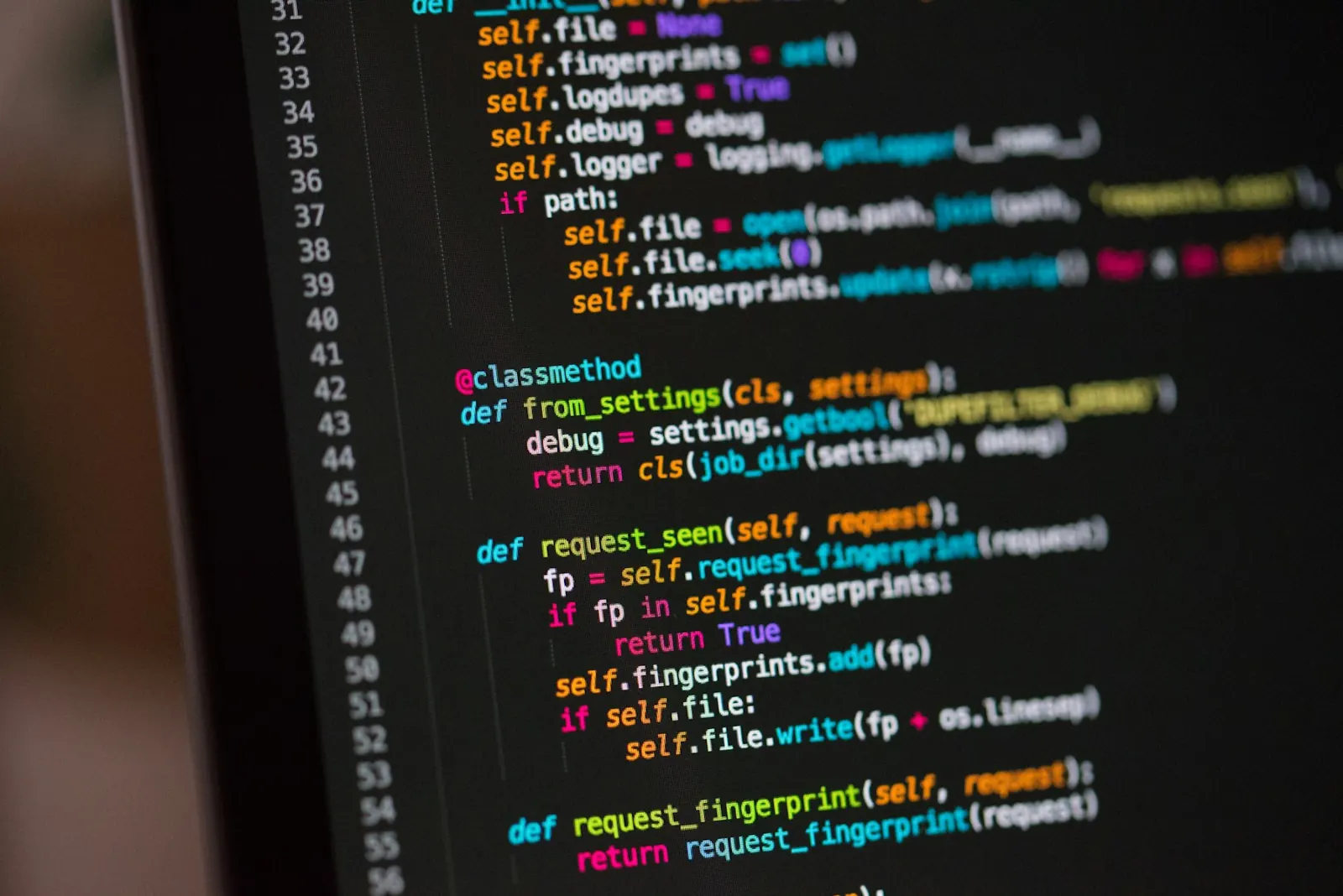
Python code on a dark editor screen

AI coding & agents

  • Claude
  • GitHub Copilot
  • Cursor
  • OpenAI
  • LangGraph
  • Ollama

Languages & ML

  • Python
  • TypeScript
  • Java
  • Go
  • PyTorch
  • scikit-learn

Data & storage

  • PostgreSQL
  • Snowflake
  • Databricks
  • MongoDB
  • Redis
  • Qdrant

MLOps & pipelines

  • MLflow
  • Apache Airflow
  • dbt
  • Docker
  • Kubernetes
  • Terraform

Quality & security

  • Pytest
  • Playwright
  • Cypress
  • SonarQube
  • Snyk
  • Selenium

Delivery & collaboration

  • Jira
  • Confluence
  • GitHub
  • GitHub Actions
  • Azure DevOps
  • Slack
Explore our full technology stack →
What We Deliver

A Delivery System,Not a Tool Licence.

01AI delivery playbook

Stage-by-stage practices for where AI drafts, where people decide and how work moves between them.

  • Role-by-role working agreements
  • Definition of done for AI-assisted work
  • Escalation and review rules
02Prompt & agent library

Versioned prompts, agents and templates for stories, designs, code review, tests and release notes.

  • Stored in your repo, reviewed like code
  • Evaluated against sample tasks
  • Owned by named maintainers
03AI quality gates in CI/CD

Automated review, security scanning and test generation wired into the pipelines you already run.

  • Static analysis and secret scanning
  • Generated test suites on every pull request
  • Mandatory human approval to merge
04Test automation & synthetic data

Generated test suites and privacy-safe test data, with coverage tracked on every change.

  • Unit, API and end-to-end layers
  • Synthetic data that mirrors production shape
  • Coverage trends per service
05Governance pack

Usage policy, data-handling rules, model approval and audit trail — agreed with security and legal.

  • Approved models and data classes
  • Audit trail of AI-assisted changes
  • IP and licence checks
06Productivity dashboard

Cycle time, throughput, quality and adoption measured against your baseline, team by team.

  • DORA metrics plus AI adoption
  • Weekly team reviews
  • Baseline-to-date comparison
How We Engage

Prove It on One Team.Then Scale.

Phase 12 wks

Assess

Baseline delivery metrics, review your toolchain and policies, and pick a pilot team and backlog.

Phase 26–8 wks

Pilot

Run the AI-native lifecycle on real work with one team, coaching daily and measuring weekly.

Phase 3Ongoing

Scale

Roll out the playbook, libraries and quality gates team by team, with champions and a live dashboard.

FAQs

Questions We HearOften.

What is an AI-native SDLC?

A software delivery lifecycle where generative AI and agents are built into every stage — requirements, design, coding, testing, release and operations — with defined points where people review and decide. The goal is a repeatable team practice, not individual use of an AI assistant.

Do we have to change our existing tools?

No. We integrate with your current source control, CI/CD, issue tracking and cloud. AI quality gates and agents are added to the pipelines you already run.

How do you keep AI-generated code secure and compliant?

Every engagement includes a governance pack: usage and data-handling policy, approved models, automated security scanning in CI, mandatory human review for merges, and an audit trail of AI-assisted changes.

How do you measure the impact?

We baseline cycle time, throughput, defect rates and test coverage before the pilot and track the same measures weekly, so improvement is compared against your own numbers.

How long does it take to see results?

Pilot teams usually see measurable change within the 6–8 week pilot. Organization-wide rollout is paced team by team.
delphilens@pilot:~

$ plan-pilot --team yours --weeks 8